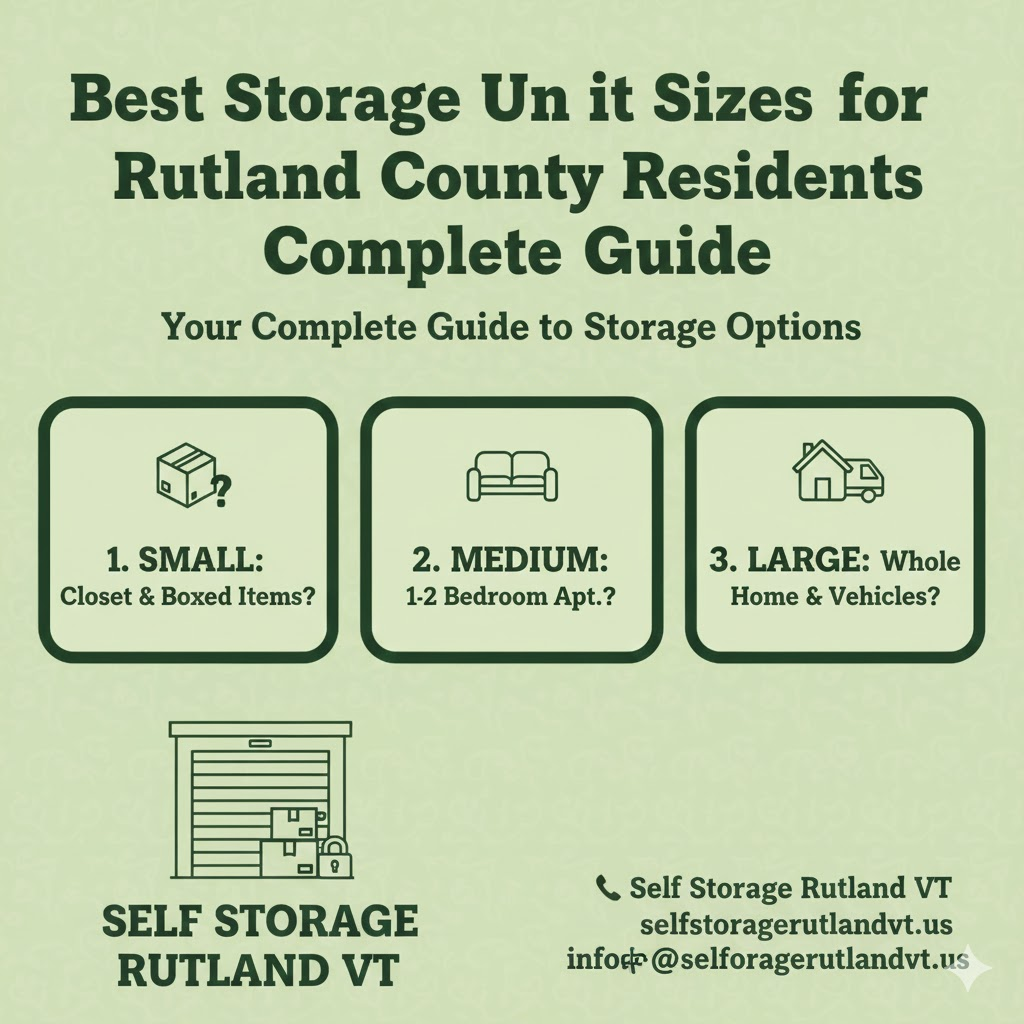
Selecting the appropriate storage unit size prevents wasted money on excess space while ensuring adequate room for your belongings. Rutland County residents face unique storage needs based on seasonal requirements, housing situations, and lifestyle factors. Understanding standard unit sizes and their capacities helps you make informed rental decisions.
Self Storage Rutland VT offers various unit sizes designed to accommodate everything from small apartment cleanouts to complete household moves. Choosing correctly the first time saves money and hassle.
Understanding Storage Unit Size Measurements
Storage facilities measure units in square feet, indicating floor space. However, ceiling height significantly affects actual capacity.
Standard ceiling heights range from 8 to 12 feet. Units with 10-foot ceilings provide 25% more volume than 8-foot units with identical floor dimensions.
Calculate total cubic feet by multiplying length, width, and height. A 10×10 unit with 10-foot ceilings offers 1,000 cubic feet of space, while the same floor area with 8-foot ceilings provides only 800 cubic feet.
Common Storage Unit Sizes
Storage facilities typically offer units in standard sizes. Understanding what fits in each helps you select appropriately.
Small Units (5×5 and 5×10)
Small units accommodate contents from single rooms or small apartments. These compact spaces work well for seasonal storage, business files, or college student belongings.
5×5 Units (25 Square Feet)
A 5×5 unit provides space equivalent to a small walk-in closet. These units hold:
Small furniture pieces like chairs or nightstands Approximately 10 to 15 boxes Seasonal decorations for a small apartment Business files and office supplies Sports equipment or hobby materials
College students storing belongings between semesters typically find 5×5 units sufficient. The compact size keeps costs low while protecting items during breaks.
5×10 Units (50 Square Feet)
A 5×10 unit doubles the 5×5 capacity, resembling a small bedroom or large closet. These units accommodate:
One-bedroom apartment contents Mattress set and small furniture pieces Approximately 20 to 30 boxes Seasonal items like lawn equipment Motorcycle or small vehicle storage
According to U-Haul’s storage calculator5×10 units serve as the most popular size for apartment dwellers who need to store essential items. The space provides adequate room for typical one-bedroom apartment contents.
Medium Units (10×10 and 10×15)
Medium units suit larger apartments, small homes, or significant decluttering projects.
10×10 Units (100 Square Feet)
A 10×10 unit equals a standard bedroom and accommodates substantial belongings:
Two-bedroom apartment or small house contents Complete bedroom sets including mattresses, dressers, and nightstands Living room furniture including sofas and entertainment centers Approximately 30 to 50 boxes Small appliances and seasonal items
Many Rutland County residents use 10×10 units during home renovations. The space protects furniture and belongings while contractors complete projects.
10×15 Units (150 Square Feet)
A 10×15 unit provides 50% more space than a 10×10, handling larger moves:
Three-bedroom home contents Multiple furniture sets from several rooms Major appliances including washers and dryers Approximately 50 to 75 boxes Larger items like pianos or entertainment centers
Families downsizing from houses to apartments often need 10×15 units. The extra space accommodates furniture that doesn’t fit in smaller living quarters but remains too valuable to discard.
Large Units (10×20 and 10×30)
Large units serve complete household moves, business inventory, or vehicle storage needs.
10×20 Units (200 Square Feet)
A 10×20 unit matches a standard one-car garage:
Three to four-bedroom home contents, complete furniture sets from multiple rooms, major appliances, large items, approximately 75 to 100 boxes, and vehicle storage with space for additional items can fit into the right size storage unit.
Business owners frequently use 10×20 units for inventory storage. The space accommodates substantial merchandise while remaining more affordable than commercial warehouse rentals.
10×30 Units (300 Square Feet)
A 10×30 unit provides extensive storage capacity, making it suitable for those who need to store large items.
Four to five-bedroom home contents Multiple vehicle storage Business inventory and equipment Approximately 100 to 150 boxes Large recreational vehicles or boats
Construction contractors in Rutland County often rent 10×30 units for equipment and materials. The space protects valuable tools while providing convenient access.
Specialty Storage Options
Beyond standard rectangular units, facilities offer specialty storage configurations.
Climate-Controlled Units
Climate-controlled spaces maintain consistent temperature and humidity levels. These units cost more but protect sensitive items from Vermont’s harsh climate.
Electronics, documents, photographs, musical instruments, and antiques require climate control. Without environmental protection, these items suffer damage from temperature fluctuations and humidity.
Drive-Up Access Units
Drive-up units allow vehicles to park directly outside unit doors. This convenient feature simplifies loading and unloading heavy items in your self-storage unit.
Ground-floor drive-up units typically cost more than upper-level spaces. However, the convenience justifies additional expense when storing heavy furniture or making frequent trips.
Vehicle Storage Spaces
Dedicated vehicle storage accommodates cars, motorcycles, boats, and RVs. These spaces range from simple parking spots to enclosed units with climate control.
According to the storage unit size guide, it’s essential to choose the right size for your needs. RV Industry Association, over 11 million American households own RVs. Vermont’s seasonal climate makes storage necessary during winter months for recreational vehicles.
Determining Your Storage Needs
Accurate needs assessment prevents renting oversized units that waste money or undersized spaces requiring expensive upgrades.
Inventory Your Belongings
Create a detailed list of items requiring storage. Group belongings by category: furniture, boxes, appliances, and specialty items.
Measure large furniture pieces. Note dimensions to ensure items fit through unit doors and within available space.
Count boxes and estimate additional packing needs. Most households underestimate the number of boxes required for complete packing.
Consider Future Needs
Storage requirements often change over time. Business inventory grows, and households accumulate additional belongings.
Renting slightly larger units costs less than upgrading later. Moving to bigger units involves packing, moving, and additional rental expense.
Seasonal storage needs vary throughout the year. Vermont residents storing winter sports equipment need space for summer items during warm months.
Calculate Space Requirements
Use facility calculators to estimate required space. Most storage companies provide online tools that calculate size based on item lists.
Add 10% to 20% buffer space for comfort. Cramped units make accessing items difficult and increase damage risk.
Plan for organization systems. Shelving units and walkways improve accessibility but require additional floor space.
Packing Strategies for Different Unit Sizes
Efficient packing maximizes storage capacity regardless of unit size.
Small Unit Packing (5×5, 5×10)
Small units require careful organization to maximize limited space.
Stack boxes floor to ceiling along walls. Place heaviest boxes on bottom with lighter containers above.
Use vertical space completely. Install shelving units to create additional layers for smaller items.
Disassemble furniture whenever possible to maximize space in your self-storage unit. Beds, tables, and chairs occupy less space when broken down.
Medium Unit Packing (10×10, 10×15)
Medium units allow for better organization and accessibility.
Create aisles between furniture groups. Leave pathways to access items without moving everything.
Place frequently needed items near the front. Seasonal belongings can be stored toward the back.
Use furniture as storage containers. Drawers and cabinets can hold smaller items, maximizing space efficiency.
Large Unit Packing (10×20, 10×30)
Large units accommodate extensive belongings with room for organization.
Develop a floor plan before moving items. Pre-planning prevents inefficient space usage.
Group items by category or room. Organized sections simplify finding specific belongings later.
Maintain clear access paths. Even large units become difficult to navigate without strategic organization.
Cost Considerations
Storage unit pricing varies based on size, features, and location.
Size and Price Relationship
Larger units cost more than smaller spaces. However, price per square foot often decreases with size.
A 5×5 unit might rent for $50 monthly, or $2 per square foot. A 10×10 unit renting for $150 monthly costs $1.50 per square foot.
Calculate cost per square foot when comparing options. Sometimes larger units provide better value than multiple small spaces.
Feature Premium Costs
Climate control adds 20% to 50% to base rental rates. This premium protects sensitive belongings but increases monthly expenses.
Drive-up access units typically cost 10% to 25% more than interior spaces. Convenience and loading ease justify the additional expense for many renters.
First-floor units command premium pricing over upper levels. Ground-floor convenience adds 5% to 15% to monthly rates for self-storage units.
Long-Term Rental Discounts
Many facilities offer discounts for extended commitments. Six-month or annual leases often include reduced rates.
Prepayment discounts provide savings opportunities for those renting larger size units. Paying several months upfront can reduce per-month costs by 5% to 10%.
Promotional offers attract new customers. First-month free or reduced rate specials significantly lower initial storage costs.
Seasonal Storage for Rutland County Residents
Vermont’s distinct seasons create specific storage needs throughout the year.
Winter Sports Equipment
Ski equipment, snowmobiles, and winter gear require storage during off-season months. A 5×10 unit accommodates multiple sets of skis, snowboards, and related equipment.
Clean equipment thoroughly before storage. Remaining moisture promotes rust and mildew growth.
Summer Recreation Items
Boats, jet skis, and camping equipment need protection during winter. These items require larger units or dedicated vehicle storage.
Winterize equipment according to manufacturer specifications. Proper preparation prevents damage during months of storage.
Lawn and Garden Equipment
Mowers, trimmers, and garden tools occupy garage space during winter. Storing these items frees space for vehicles during snow season.
Drain fuel from gas-powered equipment. Stabilizers prevent fuel degradation but complete draining provides better protection.
Holiday Decorations
Seasonal decorations accumulate over years, eventually overwhelming home storage capacity. A small unit protects decorations while keeping homes clutter-free.
Label containers clearly by holiday. Organization simplifies decoration retrieval when holidays arrive.
Business Storage Solutions
Rutland County businesses use storage units for various purposes.
Inventory Storage
Retail businesses store excess inventory in storage units. This strategy reduces retail space costs while maintaining product availability.
A 10×15 or 10×20 unit accommodates substantial merchandise inventory. Shelving systems maximize vertical space for organized product storage.
Document Retention
Legal, medical, and financial businesses must retain documents for specific periods. Storage units provide cost-effective document archiving.
Climate control protects paper documents from deterioration. Vermont’s humidity makes environmental control essential for long-term storage.
Equipment Storage
Contractors and service businesses store tools and equipment between jobs. Secure storage prevents theft while keeping vehicles uncluttered.
Drive-up units simplify daily equipment loading and unloading. Convenient access reduces time spent retrieving necessary tools.
Moving and Transition Storage
Life changes often create temporary storage needs.
Home Sale Transitions
Selling homes often requires temporary storage during the transition period. Empty rooms show better, helping homes sell faster.
A 10×15 unit typically accommodates furniture removed for staging purposes. Items remain accessible for the new home while improving sale prospects.
Renovation Projects
Home renovations require removing furniture and belongings from work areas. Storage units protect items from dust, damage, and theft during construction.
Duration determines appropriate size. Extensive renovations affecting multiple rooms need larger units than single-room projects.
College Students
Rutland County’s college students need summer storage for dorm belongings. A 5×5 unit accommodates typical dorm room contents.
Share units with roommates to reduce costs. Two students splitting a 5×10 unit pay less than individual 5×5 rentals.
Making the Final Decision
Choosing the right storage unit requires balancing multiple factors.
Visit facilities in person before deciding. Online research provides information, but physical tours reveal condition and security features.
Ask about current promotions and discounts. Facilities often offer deals not advertised online.
Verify contract terms carefully. Understand minimum rental periods, rate increase policies, and termination procedures.
Start with slightly larger units if uncertain about the appropriate storage size. Self Storage Rutland VT allows downsizing if you overestimate needs, but upgrading later creates moving hassles.
FAQs
What storage unit size do I need for a two-bedroom apartment?
A storage unit size for a two-bedroom apartment typically requires a 10×10 or 10×15 unit. A 10×10 storage unit size accommodates most two-bedroom apartment contents including furniture, appliances, and boxes. The storage unit size you need depends on furniture quantity and whether items are packed efficiently.
How much does storage cost per month in Rutland Vermont?
Storage costs per month in Rutland Vermont range from $50 for small 5×5 units to $300 for large 10×30 spaces. Climate-controlled units cost 20% to 50% more than standard storage. The storage cost per month varies based on size, features, and location within Rutland County. Contact facilities directly for current pricing.
Can I store a vehicle in a regular storage unit?
You can store a vehicle in a regular storage unit if the unit is large enough and facility policies allow it; however, check the self-storage unit guidelines for vehicle storage. A 10×15 unit accommodates most cars, while 10×20 or 10×30 units provide space for vehicles plus additional items. Verify vehicle storage policies with facility management before renting a self-storage unit.
What is the smallest storage unit size available?
The smallest storage unit size available is typically 5×5 feet, providing 25 square feet of space. The smallest storage units accommodate approximately 10 to 15 boxes plus small furniture items. Some facilities offer 5×3 lockers for very minimal storage needs, but 5×5 represents the most common smallest size.
Do I need climate control for my storage unit in Vermont?
You need climate control for your storage unit in Vermont when storing electronics, documents, photographs, musical instruments, antiques, or wooden furniture. Vermont’s humidity and temperature extremes damage sensitive items in non-climate-controlled units. Climate control in self-storage units prevents mold, warping, and deterioration caused by environmental fluctuations.
How do I know if I need a larger storage unit?
You know if you need a larger storage unit when items fill the space completely, leaving no access paths or organization room. If you cannot reach items without moving everything, the unit is too small. Adding 10% to 20% buffer space improves accessibility and prevents damage from overcrowding.
Can I change storage unit sizes after renting?
You can change storage unit sizes after renting if facilities have availability in your desired size. Most facilities allow upgrades or downgrades with proper notice. However, changing sizes requires moving your belongings to the new unit. Some facilities charge fees for size changes, so inquire about policies regarding size storage unit adjustments before renting.
Conclusion
Selecting the appropriate storage unit size balances cost, capacity, and convenience. Small units suit single-room contents or minimal belongings, while large spaces accommodate complete households or business inventory. Rutland County residents should consider seasonal needs, climate control requirements, and future storage changes when choosing unit sizes.
For expert guidance on selecting the right storage unit size for your specific needs, contact Self Storage Rutland VT at info@selfstoragerutlandvt.us. Our team helps match your belongings with the appropriate unit sizes based on a comprehensive storage unit size guide.