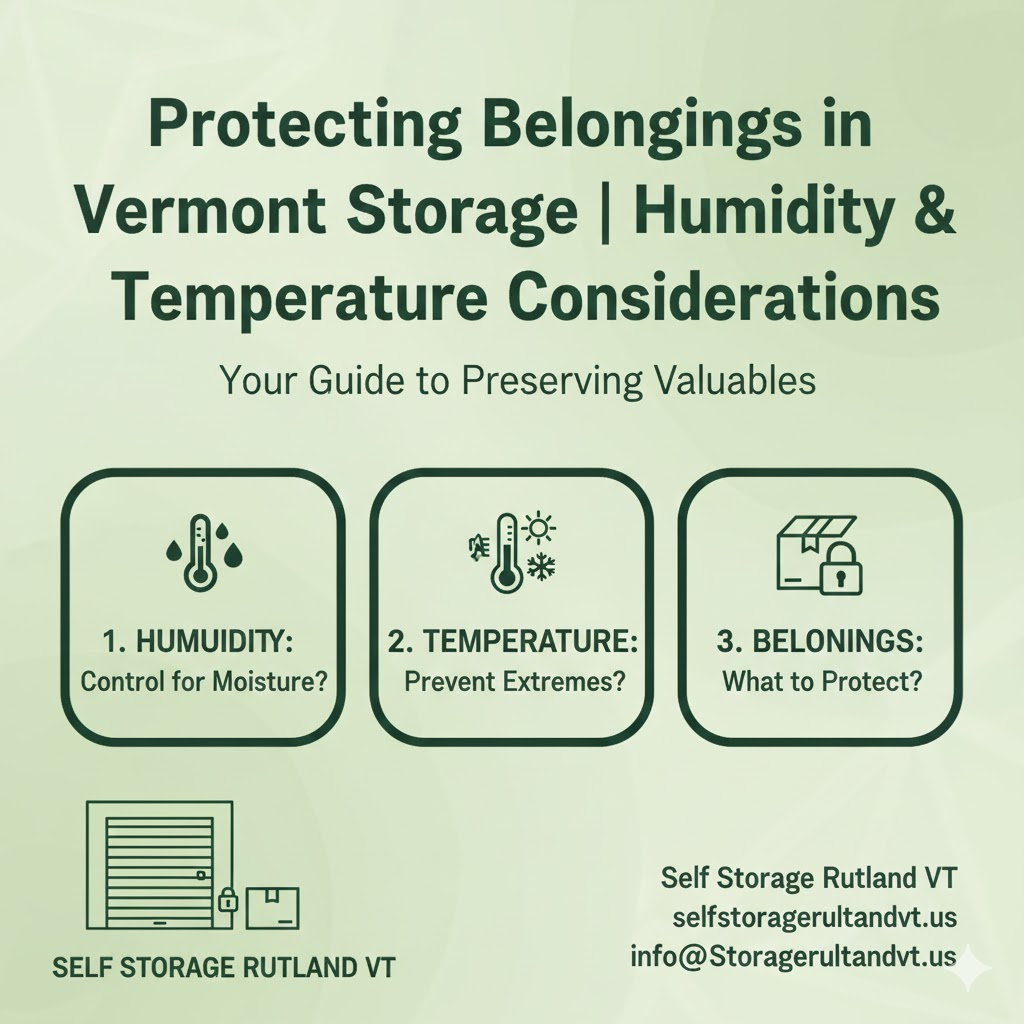
Vermont’s climate presents specific challenges for storing your belongings. With harsh winters, humid summers, and rapid temperature fluctuations, items stored without proper climate considerations can suffer significant damage. Understanding how humidity and temperature affect your stored goods helps you make informed decisions about protecting your valuables.
Whether you’re storing furniture, documents, electronics, or family heirlooms, Self Storage Rutland VT offers climate-controlled options designed to preserve your belongings throughout Vermont’s demanding seasonal changes.
Vermont’s Climate Challenges for Storage
Vermont experiences four distinct seasons with extreme variations. Winter temperatures regularly drop below 0°F, while summer humidity levels can reach 70% or higher.
These conditions create an environment where moisture, mold, and temperature damage pose real threats to stored items. According to the National Oceanic and Atmospheric AdministrationIn Vermont, where the average annual precipitation exceeds 40 inches, it’s crucial to apply summer storage tips to manage elevated moisture levels year-round.
The freeze-thaw cycle common in Vermont creates additional concerns. Items that absorb moisture during humid periods can crack or warp when temperatures plummet.
How Humidity Affects Stored Items
Relative humidity above 60% creates ideal conditions for mold and mildew growth. When moisture levels remain elevated for extended periods, organic materials begin to deteriorate, highlighting the importance of ways to protect your belongings from heat.
Vulnerable Items
Paper documents, photographs, and books absorb moisture readily. Within weeks of exposure to high humidity, these items can develop mold spots, warping, and permanent discoloration.
Wooden furniture swells when it absorbs moisture. This expansion can cause joints to separate, finishes to crack, and drawers to stick permanently.
Leather goods, including furniture and clothing, develop mildew on their surfaces if not stored properly, so use storage tips to keep your belongings safe. The musty odor that develops is difficult to remove, and the material weakens over time.
Metal items rust when exposed to humid conditions. Tools, appliances, and metal furniture develop corrosion that compromises both appearance and functionality.
Electronics and Humidity
Electronic devices are particularly susceptible to moisture damage. Circuit boards corrode, and internal components fail when exposed to high humidity levels.
Condensation forms inside electronic devices when they’re moved from cold storage into warm environments. This moisture causes short circuits and permanent damage.
According to Consumer Reports, storing electronics in uncontrolled environments can reduce their lifespan by up to 50%. The organization recommends climate-controlled storage for any valuable electronic equipment.
Temperature Fluctuations and Your Belongings
Extreme temperature changes cause materials to expand and contract. This constant movement leads to cracking, warping, and structural damage.
Cold Temperature Damage
Freezing temperatures affect various materials differently. Liquids expand when frozen, causing containers to burst. Paint, cosmetics, and cleaning supplies become unusable after freezing, so it’s important to follow summer storage tips to keep your belongings safe.
Plastics become brittle in cold conditions. Storage bins, furniture components, and household items crack easily when temperatures drop below freezing.
Wooden items contract in cold, dry conditions. This shrinkage can cause permanent warping and separation of glued joints.
Heat Damage Concerns
High temperatures accelerate chemical breakdown in many materials. Plastics warp and release harmful fumes. Adhesives soften and fail, causing items to fall apart.
Photographs and artwork fade when exposed to heat. The degradation is permanent and irreversible.
Upholstered furniture dries out in hot conditions. Fabrics become brittle, and padding deteriorates, reducing the item’s lifespan and comfort.
Climate-Controlled vs. Standard Storage Units
Climate-controlled units maintain consistent temperature and humidity levels year-round. These facilities typically keep temperatures between 55°F and 80°F and relative humidity below 55%.
Standard units lack environmental controls. They experience the same temperature and humidity fluctuations as the outside environment, with minimal protection from Vermont’s climate extremes.
Cost Considerations
Climate-controlled storage units cost 20% to 50% more than standard units. However, this investment protects items worth far more than the additional rental expense.
Replacing damaged furniture, documents, or electronics costs significantly more than paying for climate control. When storing valuable or irreplaceable items, the extra cost provides essential protection.
Items That Require Climate Control
Certain belongings should always be stored in climate-controlled environments. Electronics, musical instruments, and antiques are particularly vulnerable to temperature and humidity damage.
Important documents, photographs, and artwork require stable conditions to keep your belongings safe from environmental damage. Business records, family photos, and collectibles preserve their condition only in controlled environments.
Furniture made from wood, leather, or upholstered materials benefits from climate control. These items, like important documents and photographs, maintain their appearance and functionality when protected from environmental extremes.
Preparing Items for Storage
Proper preparation minimizes damage risk regardless of storage type. Taking time to clean, wrap, and organize items before storage pays dividends when you retrieve them.
Cleaning and Drying
Clean all items thoroughly before storage. Dirt and residue attract moisture and accelerate deterioration.
Ensure items are completely dry before packing. Any moisture trapped with stored goods creates ideal conditions for mold growth.
Metal items should be wiped with a light coat of oil to prevent rust. This protective layer provides a barrier against humidity.
Proper Packing Materials
Use moisture-resistant packing materials. Plastic bins with tight-fitting lids provide better protection than cardboard boxes, which absorb moisture, making them ideal for self-storage solutions.
Silica gel packets absorb excess moisture in enclosed spaces. Place these desiccants in boxes containing sensitive items.
Furniture covers made from breathable materials prevent dust accumulation while allowing air circulation. Plastic covers trap moisture and should be avoided.
Organization Strategies
Elevate items off the floor using pallets or shelving. This prevents damage from potential water intrusion and improves air circulation.
Leave space between items and walls. Air circulation around stored goods helps maintain consistent conditions and prevents moisture buildup.
Create an inventory with photos. This documentation helps track items and provides records for insurance purposes if damage occurs.
Monitoring Storage Conditions
Even in climate-controlled units, monitoring conditions provides additional protection. Simple tools help you track temperature and humidity levels.
Humidity Indicators
Hygrometers measure relative humidity levels. These inexpensive devices provide real-time readings of moisture content in the air, offering effective ways to protect your belongings from heat and humidity.
Color-changing humidity cards offer visual indicators. These cards change color when humidity exceeds safe levels, alerting you to potential problems.
Temperature Monitoring
Digital thermometers with memory functions record high and low temperatures. This data reveals whether conditions remain stable or fluctuate significantly.
Smart sensors with wireless connectivity send alerts to your phone. These devices provide peace of mind by notifying you of any condition changes.
Seasonal Considerations in Vermont
Vermont’s seasonal changes require different approaches to storage protection throughout the year.
Winter Precautions
Before winter arrives, ensure stored items can withstand potential heating system failures. Even climate-controlled units can experience temporary outages during severe weather.
Remove any liquids that could freeze. Water-based products expand when frozen, causing containers to burst and damage nearby items.
Check insulation around doors and windows. Gaps allow cold air infiltration, creating temperature variations within the unit.
Summer Humidity Management
Summer brings Vermont’s highest humidity levels. Increase the frequency of storage unit checks during these months to ensure that you can protect your belongings from heat and moisture.
Replace desiccant packets as they become saturated. Fresh silica gel continues protecting items as outdoor humidity rises.
Run dehumidifiers in non-climate-controlled units if possible. Some storage facilities allow tenants to use small dehumidifiers in their units.
Spring and Fall Transitions
Rapid temperature changes during transitional seasons create condensation risks. Moisture forms on cold surfaces when warm, humid air enters storage spaces.
Avoid accessing storage units during temperature extremes. Opening doors during these times introduces humid or cold air that disrupts the internal environment.
Allow time for temperature equalization before removing items. When taking belongings from storage, let them adjust to ambient temperature before use to protect your belongings from heat and humidity.
Long-Term Storage Strategies
Items stored for extended periods require additional protection measures. The longer storage duration increases exposure to potential damage.
Regular Inspections
Visit your storage unit quarterly at minimum. These inspections allow you to catch problems early before damage becomes severe.
Check for signs of moisture, including condensation, musty odors, or visible mold. Address any issues immediately to prevent spread.
Verify that climate control systems continue functioning properly. Temperature and humidity should remain within acceptable ranges.
Maintenance Tasks
Rotate items periodically to ensure even air exposure. This prevents moisture from settling in specific areas.
Replace moisture absorbers regularly. Even in climate-controlled units, desiccants provide an extra layer of protection.
Update packing as needed. If materials show wear or damage, repack items with fresh supplies.
Insurance and Documentation
Protecting valuable items includes proper insurance coverage. Standard homeowners or renters insurance may not fully cover stored belongings.
The Insurance Information Institute recommends reviewing your policy to understand coverage limits for off-premise storage. Many policies limit coverage for items stored away from your primary residence.
Storage facility insurance provides additional coverage options. These policies specifically address risks associated with stored items.
Document everything you store with detailed photos and descriptions. This documentation proves ownership and condition if you need to file an insurance claim.
Working with Storage Facilities
Choose storage facilities that prioritize climate control and maintenance to ensure your belongings safe during the hot summer months. Self Storage Rutland VT maintains consistent environmental conditions designed to protect your belongings from Vermont’s challenging climate.
Ask potential storage providers about their climate control systems. Request information about temperature ranges, humidity control, and backup systems for power outages.
Inquire about facility maintenance schedules. Regular HVAC system servicing ensures consistent performance throughout the year.
Visit facilities during different seasons. This allows you to experience actual conditions and verify that climate control functions as advertised.
FAQs
What humidity level is safe for storing belongings in Vermont?
Safe humidity levels for storing belongings remain below 55% relative humidity. Humidity levels below 55% prevent mold growth and protect most materials from moisture damage. Climate-controlled storage units maintain these optimal conditions year-round.
Do I need climate-controlled storage for furniture in Vermont?
Climate-controlled storage for furniture in Vermont is necessary for wooden, leather, and upholstered pieces. Climate control protects these materials from Vermont’s humidity and temperature extremes, making it essential for self-storage. Without environmental control, furniture can warp, crack, develop mold, and suffer permanent damage.
How cold do storage units get in Vermont winters?
Storage units in Vermont without climate control can reach outdoor temperatures, often dropping below 0°F during winter. Climate-controlled units maintain temperatures between 55°F and 80°F regardless of outside conditions. The temperature difference between controlled and uncontrolled units can exceed 70°F during Vermont winters.
Can electronics be damaged in storage during Vermont summers?
Electronics can be damaged in storage during Vermont summers due to heat and humidity. Summer temperatures in uncontrolled units can exceed 90°F, with humidity reaching 70% or higher. These conditions cause condensation on circuit boards, leading to corrosion and failure. Climate-controlled storage prevents this damage and helps keep your belongings safe from humidity and temperature fluctuations.
What items should never be stored in non-climate-controlled units in Vermont?
Items that should never be stored in non-climate-controlled units in Vermont include electronics, photographs, important documents, musical instruments, antiques, leather goods, and wooden furniture. These items require stable temperature and humidity to prevent irreversible damage. Vermont’s extreme seasonal variations make climate control essential for valuable belongings.
How often should I check on items in Vermont storage?
Items in Vermont storage should be checked quarterly at minimum. Regular inspections allow you to identify moisture problems, verify climate control function, and address issues before damage becomes extensive. During transitional seasons with rapid weather changes, monthly visits provide additional protection.
Does climate-controlled storage prevent all damage to stored items?
Climate-controlled storage prevents most damage to stored items but does not eliminate all risks. While temperature and humidity control protects against common environmental damage, proper packing, preparation, and organization remain important. Items still need protection from dust, pests, and physical damage regardless of climate control.
Conclusion
Vermont’s climate demands careful consideration when storing belongings. Humidity and temperature fluctuations can damage or destroy valuable items without proper environmental control. Climate-controlled storage provides the consistent conditions necessary to preserve furniture, electronics, documents, and other temperature-sensitive belongings throughout Vermont’s extreme seasonal changes.
Protecting your stored items requires understanding Vermont’s unique climate challenges and taking appropriate precautions. For reliable climate-controlled storage solutions in Rutland County, contact info@selfstoragerutlandvt.us to discuss your storage needs.