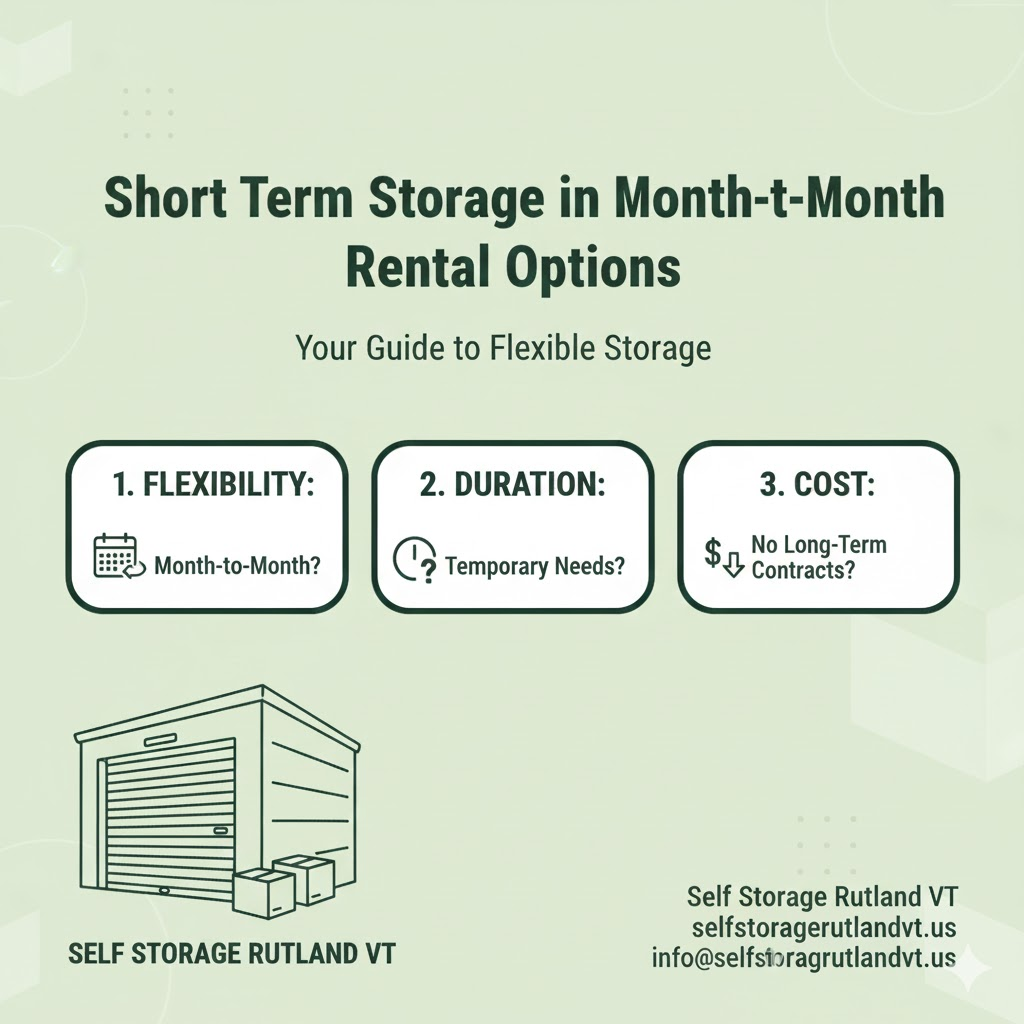
Life transitions often create temporary storage needs. Moving between homes, renovating, downsizing, or traveling all require flexible storage solutions without long-term commitment. Month-to-month rental agreements provide the flexibility to store belongings for precisely the duration needed.
Self Storage Rutland VT specializes in flexible short-term storage rentals that accommodate changing needs without penalty fees or extended contracts. Understanding month-to-month options helps you select appropriate storage solutions.
Understanding Month-to-Month Storage Rentals
Month-to-month storage agreements operate differently from annual leases or extended contracts. These flexible arrangements allow renters to terminate service with minimal notice, typically 30 days or less.
According to the Self Storage Association, approximately 70% of storage renters prefer month-to-month arrangements over fixed-term contracts. This flexibility accommodates uncertain timelines common with moves, renovations, and life transitions.
Contract Terms
Month-to-month rentals automatically renew each month unless terminated. Renters pay monthly in advance, continuing service until proper notice is provided.
Notice requirements vary by facility. Most require 15 to 30 days’ written notice before termination. Review contract terms carefully to understand specific cancellation procedures.
Some facilities charge early termination fees. These penalties compensate for anticipated long-term rentals that end prematurely. Always clarify penalty structures before signing rental agreements.
Payment Structures
Monthly payments are due on specific dates, typically the same day each month. Facilities often offer multiple payment methods including automatic bank withdrawal, credit card, or online payment.
Late payment fees apply when rent arrives after grace periods expire. Grace periods commonly range from 3 to 7 days after the due date.
Some facilities require security deposits or administrative fees. These upfront costs vary but typically range from one month’s rent to specific flat fees.
Benefits of Month-to-Month Flexibility
Flexible storage arrangements provide significant advantages over fixed-term contracts.
No Long-Term Commitment
Month-to-month agreements allow termination whenever storage is no longer needed. You avoid paying for unused months when circumstances change unexpectedly.
Life transitions rarely follow predictable timelines. Home purchases delay, renovations extend beyond estimates, and temporary situations become permanent. Flexible storage adapts to these uncertainties.
Easy Scalability
Changing unit sizes becomes simple with month-to-month arrangements. Upgrade to larger units when needs increase or downsize when requirements decrease.
Fixed contracts often prohibit size changes or assess penalties for modifications. Month-to-month flexibility allows adjustments matching current needs.
Budget Control
Month-to-month storage provides precise budget control. You know exact monthly costs and can terminate service immediately when storage becomes unnecessary.
Annual contracts require payment regardless of actual usage. Unused months represent wasted money when situations change before contract expiration.
Common Short-Term Storage Scenarios
Various situations create temporary storage needs ranging from weeks to several months.
Home Buying and Selling
Real estate transactions frequently require temporary storage. Closing dates rarely align perfectly, creating gaps between selling one home and purchasing another.
A 10×15 storage unit typically accommodates a three-bedroom home’s contents during transition periods. This temporary solution prevents rushed decisions about discarding belongings.
According to Zillow’s research, the average time between listing and closing is approximately 60 to 90 days. Storage bridges this gap when moving dates don’t coordinate.
Renovation Projects
Home renovations require removing furniture and belongings from work areas. Project duration often extends beyond initial estimates, making month-to-month flexibility valuable.
Kitchen remodels average 6 to 12 weeks, while bathroom renovations take 4 to 6 weeks. Whole-house renovations can extend for months. Month-to-month storage accommodates these variable timelines.
Protecting belongings from construction dust and damage prevents costly replacements. Storage units keep furniture and possessions safe while contractors complete projects.
Seasonal Residents
Vermont attracts seasonal residents escaping hot summers or harsh winters elsewhere. These individuals need storage for possessions during off-season months.
Month-to-month agreements perfectly suit seasonal patterns. Store belongings during absent months without commitment for year-round rental.
Military Deployment and Relocation
Military families face unique challenges with frequent moves and deployments. Month-to-month storage accommodates uncertainty around assignment durations and return dates.
Deployment lengths often change unexpectedly. Flexible storage prevents paying for unused months if deployments end early.
College Students
Students need summer storage but return to campus after three months. Month-to-month agreements avoid paying for unnecessary months.
Rutland’s proximity to several colleges creates student storage demand. A 5×5 or 5×10 unit accommodates typical dorm room contents.
Estate Settlements
Settling estates involves sorting, distributing, and selling deceased individuals’ belongings. This process takes varying amounts of time depending on estate complexity.
Month-to-month storage houses estate contents during settlement periods. Families avoid rushed decisions while working through legal requirements and distribution logistics.
Business Transitions
Businesses experiencing changes use short-term storage for inventory, equipment, and documents. Office relocations, temporary downsizing, or seasonal inventory fluctuations create storage needs.
Month-to-month flexibility accommodates business uncertainty. Companies can expand or contract storage as situations evolve without long-term commitments.
Selecting the Right Unit Size
Short-term needs require the same size consideration as long-term storage.
Estimating Space Requirements
Create detailed inventories of items requiring storage. List furniture dimensions, box quantities, and specialty items needing accommodation.
Online size calculators help estimate required space. Most storage facilities provide these tools on their websites.
Add 10% to 20% buffer space for organization and access. Cramped units create difficulties retrieving items during short-term storage periods.
Popular Sizes for Short-Term Storage
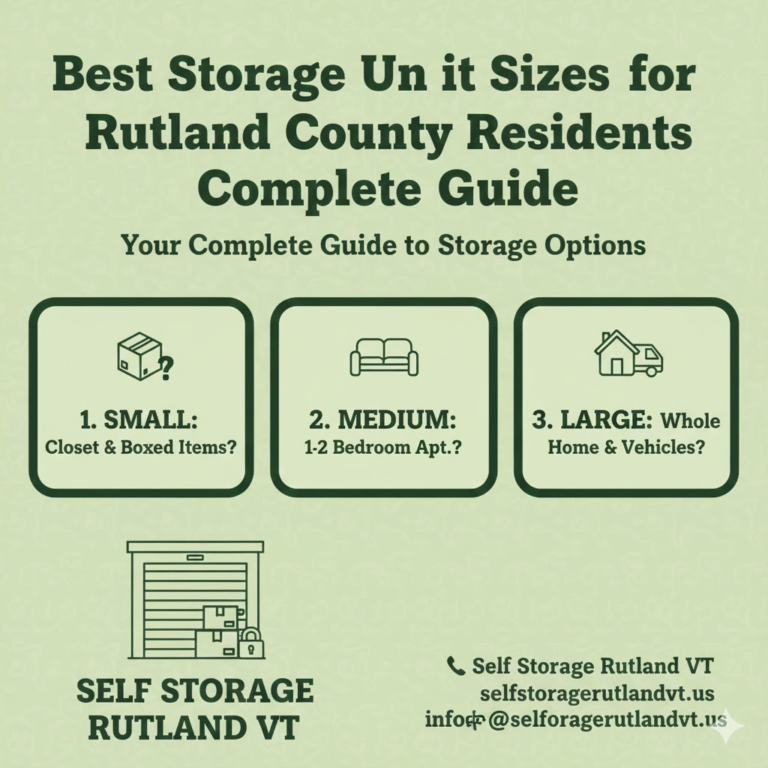
5×5 Units Small items, seasonal decorations, or student belongings fit in 5×5 spaces. These compact units minimize costs for minimal storage needs.
5×10 Units One-bedroom apartment contents or partial home storage requires 5×10 units. These popular sizes balance cost and capacity.
10×10 Units Two-bedroom apartment or partial house contents fit 10×10 spaces. This size accommodates most renovation storage needs.
10×15 Units Three-bedroom homes or complete apartment contents require 10×15 units. These spaces suit most moving transitions.
10×20 Units Complete household moves or business inventory needs 10×20 units. These large spaces handle substantial belongings.
Cost Considerations
Understanding pricing structures helps budget for short-term storage.
Monthly Rental Rates
Short-term storage costs the same per month as long-term rentals at most facilities. The difference lies in flexibility rather than pricing.
Rutland storage rates typically range from $50 for small 5×5 units to $250 for large 10×30 spaces. Climate-controlled units cost 20% to 50% more than standard options.
Initial Costs
First-month expenses often include:
- First month’s rent
- Administrative or setup fees ($10 to $50)
- Security deposit (sometimes waived)
- Lock purchase ($10 to $50 depending on quality)
Budget for approximately 1.5 to 2 times the monthly rate for initial move-in costs.
Additional Fees
Understanding all potential charges prevents surprise expenses:
Late payment fees ($15 to $50) Access card replacement ($10 to $25) Lock removal for payment default ($50 to $150) Cleaning fees if unit is left damaged
Read contracts carefully to understand all possible charges.
Promotional Offers
Short-term renters benefit from promotional offers designed to attract new customers. Common promotions include:
First month free or reduced rate Waived administrative fees Free lock with rental No security deposit
Promotional terms often require minimum rental periods. Verify that early termination doesn’t negate promotional benefits.
Climate Control Considerations
Even short-term storage benefits from climate control in Vermont’s variable weather.
When Climate Control Matters
Electronics, documents, photographs, musical instruments, and antiques need climate protection regardless of storage duration. Damage from humidity and temperature occurs within weeks, not just months.
Furniture containing wood, leather, or upholstery benefits from climate control. Vermont’s summer humidity causes mold and mildew quickly.
Cost-Benefit Analysis
Climate control adds $15 to $75 monthly depending on unit size. Weigh this cost against item replacement expense if damage occurs.
A laptop damaged by condensation costs $500 to $2,000 to replace. The climate control expense that would have prevented damage seems minimal in comparison.
Access and Convenience Factors
Short-term storage often involves frequent access to retrieve or add items.
Access Hours
Verify facility access hours match your needs. Some facilities offer 24/7 access, while others restrict entry to daylight hours.
Limited access can create problems when work schedules prevent visits during operating hours.
Drive-Up vs. Interior Units
Drive-up units simplify frequent access. Loading and unloading near unit doors saves time and effort.
Interior units cost less but require walking through hallways or using elevators. Consider convenience versus cost when making selections.
Location Convenience
Choose storage locations near your current or future residence. Frequent trips to distant facilities waste time and fuel.
Rutland’s central location in Vermont provides convenient access from surrounding communities. Proximity to highways simplifies moving logistics.
Security Requirements
Short-term storage requires the same security as long-term arrangements.
Minimum Security Features
Acceptable storage facilities should provide:
- Perimeter fencing with controlled access
- Security cameras monitoring entries and common areas
- Electronic gate systems with individual access codes
- Adequate lighting throughout property
- Regular management presence
Facilities lacking these features present unnecessary risk regardless of rental duration.
Personal Security Measures
Use high-quality disc locks or cylinder locks on units. Cheap padlocks provide minimal security and easy removal by thieves.
Avoid sharing access codes or keys. Each additional person with access increases security risk.
Document stored items with photos and inventory lists. Records support insurance claims if theft occurs.
Insurance Coverage
Short-term storage needs the same insurance protection as long-term arrangements.
Facility Insurance Limitations
Storage facility insurance protects their property and liability exposure but typically excludes tenant belongings. This limitation applies regardless of rental duration.
Personal Insurance Options
Homeowners or renters insurance may cover stored belongings. Review policies carefully as coverage often includes limits and exclusions for off-premise storage.
Specialized storage insurance provides coverage designed for stored items. Monthly premiums range from $10 to $50 depending on coverage amounts.
According to the Insurance Information Institute, storage insurance claims average $3,000 to $5,000. Adequate coverage protects against significant financial loss.
Documenting Possessions
Create detailed inventories before storage. Photographs and written descriptions support insurance claims if damage or theft occurs.
Note item conditions and estimated values. Documentation proves ownership and establishes replacement cost baselines.
Terminating Short-Term Storage
Proper termination procedures prevent unnecessary charges and complications.
Notice Requirements
Provide written notice according to contract terms. Email or written letters typically satisfy notice requirements.
Notice periods commonly range from 15 to 30 days. Verify specific requirements in your rental agreement.
Final Payments
Final rent payments are typically prorated. If you provide notice mid-month, you pay only for days actually used.
Some facilities require full-month payment regardless of move-out date. Clarify proration policies before signing rental agreements.
Unit Condition
Remove all belongings before final inspection. Items left behind may incur disposal fees.
Clean units to prevent cleaning charges. Most contracts specify acceptable condition standards at move-out.
Return keys or access cards. Facilities charge replacement fees for missing items.
Alternatives to Traditional Storage
Short-term needs sometimes benefit from alternative storage solutions.
Portable Storage Containers
Companies deliver storage containers to your location. You load at your convenience, and containers are either picked up for storage or left on your property.
This option works well for renovations where on-site access remains necessary. Portable containers provide flexibility traditional facilities cannot match.
Mobile Storage Services
Mobile storage combines container convenience with facility security. Containers are stored at secure facilities but delivered when access is needed.
This hybrid approach suits situations requiring occasional access but not frequent unit visits.
Warehouse Storage
Some moving companies offer warehouse storage with full-service options. Movers load, transport, store, and redeliver belongings.
Full-service storage costs significantly more but eliminates physical labor. This option suits those unable or unwilling to handle moving themselves.
Maximizing Short-Term Storage Value
Strategic approaches maximize value during temporary storage periods.
Efficient Packing
Use uniform box sizes for easy stacking. Consistent dimensions create stable stacks maximizing vertical space.
Label boxes on multiple sides. Clear labels simplify locating specific items without unpacking everything.
Create master inventory lists. Detailed records prevent forgetting stored items and help locate specific belongings quickly.
Organization Systems
Develop a floor plan before moving items to storage. Pre-planning prevents inefficient space usage requiring later reorganization.
Place frequently needed items near unit entrances. Strategic positioning minimizes time spent searching through units.
Leave walkways between item groups. Access paths prevent moving everything to reach items stored in back areas.
Timing Considerations
Move items to storage during facilities’ slower periods when possible. Some facilities offer better deals during winter months when demand decreases.
Begin short-term storage on early month dates when possible. This timing maximizes full-month value if notice periods prevent perfect alignment.
Working with Storage Providers
Building positive relationships with facility management benefits short-term renters.
Communication
Maintain open communication about your timeline and needs. Management can sometimes accommodate special requests when they understand your situation.
Notify facilities immediately if circumstances change. Early communication about extending or shortening rental periods helps management plan.
Problem Resolution
Address concerns immediately when problems arise. Delayed reporting makes issues harder to resolve and may void contract protections.
Document problems with photos and written descriptions. Clear evidence supports your position if disputes arise.
Planning for Short-Term Storage
Successful short-term storage begins with careful planning.
Timeline Estimates
Create realistic timeline estimates for your situation. Add buffer time for unexpected delays that commonly affect moves and renovations.
Plan for 20% to 30% longer than initial estimates. Life transitions rarely proceed exactly as planned.
Budget Planning
Budget for at least three months of storage even if you expect shorter needs. Additional months cost less than scrambling for alternatives if timelines extend.
Set aside emergency funds for unexpected storage extensions. Having financial flexibility reduces stress when situations change.
Contingency Planning
Develop backup plans if timelines change significantly. Know alternative housing or storage options if situations evolve unexpectedly.
Research extended-stay accommodations if needed. Sometimes temporary housing provides better solutions than extended storage.
FAQs
Can I rent storage month to month without a long-term contract?
You can rent storage month to month without a long-term contract at most facilities. Month to month storage rentals automatically renew monthly without extended commitment requirements. Month to month arrangements allow termination with 15 to 30 days’ notice. Most Rutland storage facilities offer month to month flexibility as standard rental terms.
How much does short-term storage cost in Rutland VT?
Short-term storage costs in Rutland VT range from $50 for small 5×5 units to $250 for large 10×30 spaces monthly. Short-term storage pricing matches long-term rates with the same flexibility benefits. Climate-controlled units cost 20% to 50% more than standard options. Expect initial move-in costs of 1.5 to 2 times monthly rates including fees and deposits.
What is the minimum rental period for storage units?
The minimum rental period for storage units is typically one month at most facilities. Some facilities allow shorter rentals but charge full monthly rates regardless of actual time used. Minimum periods protect facilities from administrative costs associated with frequent turnovers. Verify minimum rental requirements before committing to extremely short-term needs.
Can I terminate my storage rental anytime?
You can terminate your storage rental anytime with proper notice as specified in your rental agreement. Termination requires 15 to 30 days’ written notice depending on facility policies. Some contracts include early termination penalties. Review contract terms carefully to understand specific cancellation procedures and potential fees.
Is month-to-month storage more expensive than annual contracts?
Month-to-month storage is not typically more expensive than annual contracts at most facilities. Monthly rates remain consistent regardless of rental duration. Some facilities offer small discounts for prepaying several months or annual terms. However, month-to-month flexibility often provides better value than discounts requiring long-term commitment.
What happens if I need to extend my storage rental?
If you need to extend your storage rental with month-to-month agreements, simply continue paying monthly rent. Extensions require no special paperwork or contract modifications. Month-to-month arrangements automatically renew until termination notice is provided. This flexibility accommodates changing timelines without penalties or complications.
Do storage facilities in Rutland offer promotional rates for short-term rentals?
Storage facilities in Rutland offer promotional rates for short-term rentals including first month free, reduced initial rates, or waived fees. Promotional offers attract new customers and reduce initial storage costs. Verify promotional terms include no minimum rental periods that negate short-term flexibility. Ask about current promotions when contacting facilities.
Conclusion
Month-to-month storage rentals provide the flexibility needed for life’s transitions. Moving, renovating, downsizing, or temporary situations require storage without long-term commitment. Understanding month-to-month options, costs, and proper planning ensures short-term storage meets your needs efficiently.
Self Storage Rutland VT offers flexible month-to-month rentals designed for temporary storage needs throughout Rutland County. Contact info@selfstoragerutlandvt.us to discuss short-term storage solutions today.