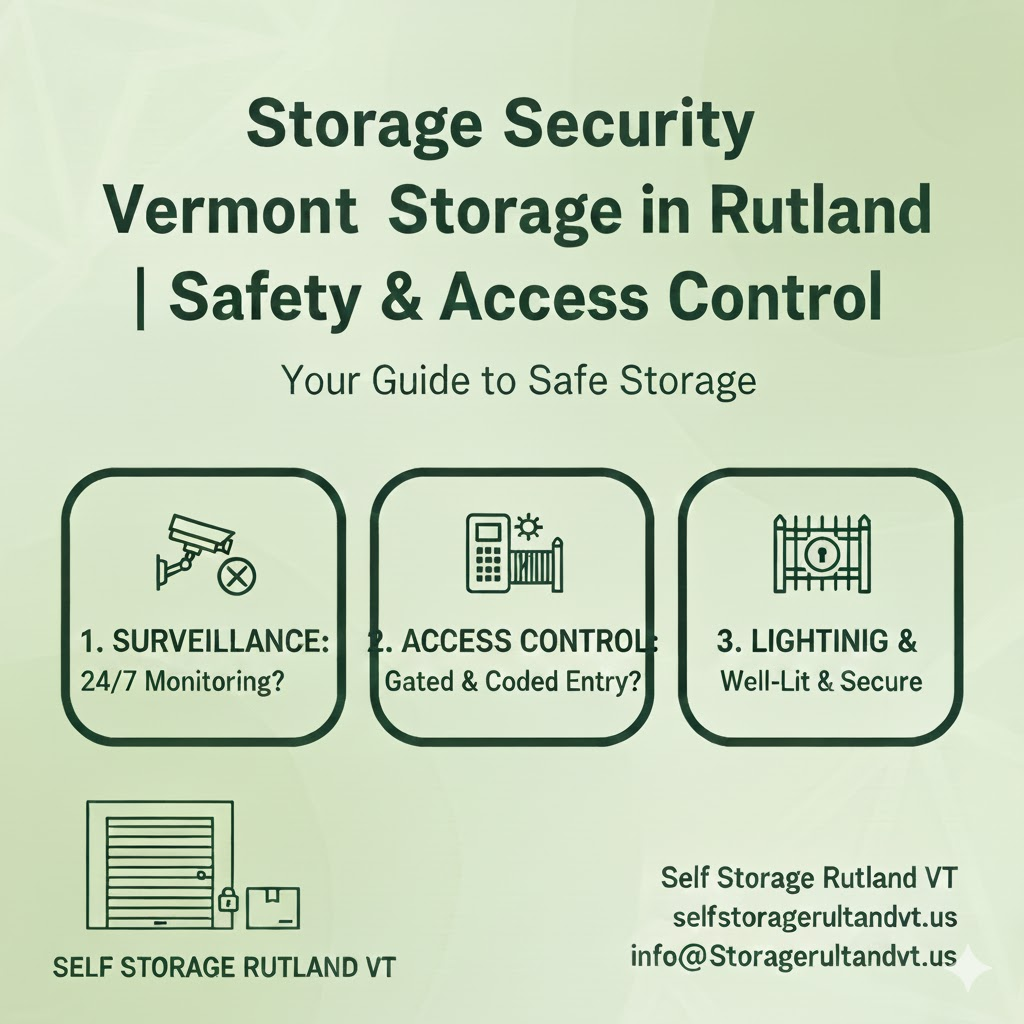
Security concerns top the list of priorities when selecting a storage facility. Your belongings represent significant financial and sentimental value, making protection from theft, vandalism, and unauthorized access in your self-storage unit essential. Understanding available security features helps you choose a facility that provides adequate protection.
Self Storage Rutland VT Self-storage facilities implement comprehensive security measures designed to protect your stored belongings around the clock. Modern security technology combined with physical safeguards creates multiple layers of protection.
Modern Storage Security Standards
Storage facility security has evolved significantly in recent years. Basic locks and fences no longer provide sufficient protection in today’s environment.
According to the Self Storage Association, facilities with comprehensive security systems experience 80% fewer theft incidents than those with minimal protection, making them better storage options. This dramatic difference demonstrates the value of robust security infrastructure.
Professional storage facilities now incorporate multiple security layers. Each barrier makes unauthorized access more difficult, deterring potential thieves and vandals.
Physical Security Barriers
The first line of defense involves physical obstacles that prevent unauthorized entry to the facility grounds.
Perimeter Fencing
High-quality perimeter fencing surrounds secure storage facilities. These barriers typically stand 6 to 8 feet tall with additional security features at the top.
Chain-link fencing with privacy slats prevents visual surveillance from outside. Potential thieves cannot identify valuable items or assess security measures when they cannot see into the property.
Gates with controlled access points limit entry to authorized users. Single entry and exit points allow self-storage facilities to monitor everyone entering and leaving the property.
Lighting Systems
Comprehensive lighting eliminates dark areas where criminals could hide or work undetected. Bright illumination throughout the facility discourages theft attempts.
Motion-activated lights provide additional security during evening hours. These systems conserve energy while ensuring adequate visibility when movement occurs.
LED lighting systems offer superior brightness and reliability. Modern facilities use these energy-efficient fixtures to maintain consistent illumination across the entire property.
Building Construction
Storage building construction affects security significantly. Metal buildings with reinforced doors provide better protection than older wooden structures.
Individual unit doors should be constructed from heavy-gauge steel. Thin materials can be cut or pried open easily, compromising security regardless of lock quality.
Walls between units should extend to the ceiling. Gaps above partial walls allow thieves to access adjacent self-storage units by climbing over barriers.
Access Control Systems
Controlling who enters the facility and when they access it represents a critical security component.
Electronic Gate Systems
Electronic gates require unique access codes for entry. These systems create detailed records of facility access, including dates and times.
Individual access codes allow facilities to track specific tenant activity. If security issues arise, management can review access logs to identify potential problems.
Time-restricted access prevents entry during overnight hours when theft risk increases in self-storage units. Many facilities limit access to daylight hours, typically from 6 AM to 9 PM.
Keypad Entry Systems
Building-level keypads provide a second layer of access control. Even after entering the facility grounds, tenants must provide credentials to access specific buildings.
Regularly changed access codes maintain security integrity. When codes remain static for extended periods, unauthorized individuals may obtain them through observation or sharing.
Tamper-resistant keypads prevent manipulation. Quality systems detect and report attempts to bypass or damage access controls.
Biometric Systems
Advanced facilities implement biometric access controls. Fingerprint or facial recognition systems ensure only authorized individuals enter restricted areas.
According to Security Magazine, biometric systems reduce unauthorized access incidents by 95% compared to traditional keypad systems. The technology makes credential sharing impossible.
Biometric data cannot be lost, stolen, or shared like traditional keys or access codes. This inherent security advantage provides superior protection for high-value storage needs.
Video Surveillance Technology
Modern video surveillance systems provide constant monitoring and detailed records of facility activity.
Camera Coverage
Comprehensive camera placement covers all entry points, hallways, and common areas. Strategic positioning eliminates blind spots where criminal activity could occur undetected.
High-definition cameras capture clear images suitable for identification purposes. When incidents occur, quality footage helps law enforcement identify suspects.
Outdoor cameras monitor perimeter areas, gates, and parking lots. Coverage extends beyond buildings to include the entire facility property.
Recording and Storage
Continuous recording captures all facility activity. Modern systems store footage for 30 to 90 days, providing extensive records for investigation purposes.
Cloud-based storage ensures footage remains available even if on-site equipment is damaged or stolen. Remote backup systems protect critical security data.
Digital video systems allow quick search and retrieval. When investigating incidents, managers can locate specific footage rapidly using time and location parameters.
Remote Monitoring
Internet-connected systems enable remote monitoring from multiple locations. Facility managers can observe real-time activity from off-site locations.
Mobile apps provide instant access to camera feeds. Managers receive alerts when unusual activity occurs, enabling rapid response to potential security issues.
Professional monitoring services observe self-storage facilities 24/7. These services immediately contact law enforcement when suspicious activity is detected.
Individual Unit Security
Beyond facility-wide measures, individual storage units require their own security features.
Lock Quality
High-quality disc locks provide superior protection compared to standard padlocks. Disc locks resist bolt cutters, sawing, and prying attempts.
Cylinder locks built into unit doors offer excellent security. These integrated systems eliminate external padlocks that can be cut or broken.
Combination locks eliminate key loss concerns. However, codes must be protected carefully and changed if security is compromised.
Unit Door Design
Roll-up doors with internal latching mechanisms resist forced entry. The design prevents prying tools from gaining leverage on door edges.
Reinforced door tracks prevent doors from being lifted off their channels. Quality construction ensures doors remain secure even under force.
Weather sealing around doors prevents water intrusion while maintaining security. Proper seals close gaps that could allow unauthorized access.
Alarm Systems
Individual unit alarms provide an additional security layer. These systems detect unauthorized entry and trigger immediate alerts.
Wireless alarms install easily without facility modifications. Battery-powered systems continue functioning during power outages.
Alarm integration with facility management systems ensures rapid response. When alarms trigger, security personnel receive immediate notification.
Staff and Management Security Practices
Human oversight complements technology-based security measures. Trained staff members provide an essential security component.
On-Site Management
Facilities with on-site managers during business hours provide superior security. Management presence deters criminal activity and enables rapid response to incidents.
Resident managers living on facility property offer 24/7 oversight. Around-the-clock human presence significantly reduces theft and vandalism risk.
Regular facility inspections identify security vulnerabilities. Staff members walking the property notice unusual activity, damaged fences, or malfunctioning equipment.
Tenant Screening
Proper tenant screening prevents criminal elements from renting units. Identity verification and background checks help facilities avoid problematic renters.
Photo identification requirements ensure tenant identity. Facilities should maintain copies of government-issued ID for all renters.
Credit checks reveal financial stability and rental history. While not foolproof, this information helps identify potential security risks.
Security Protocols
Clear security protocols guide staff response to various situations. Written procedures ensure consistent, appropriate action when incidents occur.
Emergency contact procedures enable rapid law enforcement notification. Staff should have direct lines to local police and clear reporting guidelines.
Incident documentation creates records for investigation and insurance purposes. Detailed notes about security events help identify patterns and prevent future problems.
Insurance and Liability Considerations
Understanding insurance coverage protects your interests when storing valuable items.
The Insurance Information Institute reports that many renters believe storage facility insurance covers their belongings. However, facility insurance typically covers only the property and structures, not tenant possessions.
Facility Insurance
Storage facilities carry insurance protecting their property and liability exposure. This coverage addresses facility damage but does not extend to tenant belongings.
Facilities are not liable for tenant property loss unless negligence is proven. Security breaches do not automatically make facilities responsible for stolen items.
Tenant Insurance Options
Homeowners and renters insurance policies may cover stored belongings. Review your existing coverage limits and terms before assuming protection.
Specialized storage insurance provides coverage specifically designed for stored items. These policies address unique risks associated with off-premise storage.
Insurance premiums vary based on item value and security features. Facilities with comprehensive security systems typically qualify for lower insurance rates.
Comparing Security Features
When evaluating storage facilities, compare security features systematically.
Security Feature Checklist
Review this checklist when touring potential facilities:
Perimeter fencing with controlled access gates Adequate lighting throughout property Video surveillance with recorded footage Electronic access controls with individual codes On-site management during business hours Regular security inspections and maintenance Alarm systems available for individual units Sturdy construction with reinforced doors
Facilities offering most or all these features provide significantly better security than those with minimal protections.
Red Flags
Certain conditions indicate inadequate security:
Damaged or missing fencing Dark areas lacking proper lighting Outdated or absent video cameras No access control systems Facility appears poorly maintained Management rarely present Easy public visibility into units
Avoid facilities displaying multiple red flags regardless of price advantages.
Security Best Practices for Tenants
Even in secure self-storage facilities, tenants must take personal responsibility for protection.
Lock Selection
Invest in high-quality locks exceeding minimum facility requirements. The cost difference between cheap and premium locks is minimal compared to the value of items stored in self-storage.
Use disc locks or heavy-duty padlocks rated for outdoor use. Brass or steel construction resists weathering and cutting attempts.
Avoid combination locks with external resettable dials. These locks can be decoded through patient manipulation, posing a risk for self-storage units.
Access Code Protection
Never share facility access codes with others. Each unauthorized person with your code increases security risk.
Change access codes periodically if self-storage facility systems allow. Regular changes prevent compromised codes from providing long-term access.
Memorize codes rather than writing them down. Physical records can be lost or stolen, compromising facility security.
Unit Organization
Keep valuable items toward the back of storage units. Placing expensive belongings near doors creates temptation if security is breached.
Use opaque storage containers rather than clear bins. Visible valuables attract attention from potential thieves.
Avoid leaving obvious valuables visible when accessing your unit. Close doors while organizing contents to prevent observation by others.
Documentation
Maintain detailed inventory lists with photographs. Documentation helps police investigations and insurance claims if theft occurs.
Store copies of inventory off-site. If the facility is burglarized, on-site records may be lost or destroyed.
Update inventory records when adding or removing items. Current records ensure complete information if claims become necessary.
Emergency Procedures and Response
Understanding facility emergency procedures prepares you for various situations.
Emergency Access
Facilities should have clear procedures for after-hours emergencies. Contact information for management and security services should be readily available.
Some facilities restrict after-hours access completely. Understand these policies before renting to ensure they meet your needs.
Incident Reporting
Report security concerns immediately to facility management. Suspicious activity, damaged security equipment, or safety hazards require prompt attention.
Document incidents with photos and written descriptions. Detailed records support investigations and insurance claims related to self-storage.
File police reports for theft or vandalism. Law enforcement involvement creates official records and may lead to property recovery.
Technology Integration and Future Security
Storage facility security continues evolving with new technology. Self Storage Rutland VT stays current with security innovations to provide superior protection.
Artificial intelligence systems analyze video footage for suspicious patterns. These systems detect unusual behavior that human monitors might miss.
Automated alert systems notify management of security breaches in self-storage units instantly. Rapid notification enables quick response, potentially preventing theft.
Mobile apps provide tenants with access control and monitoring capabilities. Remote unit monitoring gives owners peace of mind about their belongings.
FAQs
What security features are most important in a storage facility?
The most important security features in a storage facility include perimeter fencing with controlled access, comprehensive video surveillance, electronic gate systems with individual access codes, adequate lighting, and on-site management. Storage facilities with these features provide the most important protection against theft and vandalism. The combination of physical barriers and monitoring technology creates multiple security layers.
Are storage facilities responsible for stolen belongings?
Storage facilities are not automatically responsible for stolen belongings unless facility negligence caused the theft. Facility insurance typically covers property and structures, not tenant possessions. Tenants need their own insurance coverage to protect stored items. Review facility rental agreements carefully to understand liability limitations before storing valuable belongings.
How do electronic access codes improve storage facility security?
Electronic access codes improve storage facility security by creating detailed entry records, allowing individual user tracking, and enabling time-restricted access. Access codes prevent unauthorized individuals from entering facilities and provide investigation data if security incidents occur. Facilities can immediately deactivate codes when tenants move out, preventing former renters from accessing the property.
Should I purchase additional insurance for stored items?
You should purchase additional insurance for stored items if your homeowners or renters policy does not provide adequate coverage. Many standard policies limit coverage for off-premise storage or exclude certain items entirely. Storage insurance specifically designed for stored belongings provides comprehensive protection. The insurance cost is minimal compared to potential loss if theft or damage occurs.
Can I install my own security camera in my storage unit?
Installing your own security camera in your storage unit depends on facility policies. Some facilities allow wireless, battery-powered cameras, while others prohibit them. Check with facility management before installing any security equipment. Personal cameras should not interfere with facility systems or create liability concerns. Many self-storage facilities with comprehensive security make personal cameras unnecessary.
What type of lock is most secure for storage units?
The most secure lock for storage units is a closed-shackle disc lock or cylinder lock built into the unit door. Disc locks resist bolt cutters, sawing, and prying better than standard padlocks. High-security padlocks with hardened steel shackles provide good protection when disc locks are not suitable. Avoid cheap combination locks or key locks with exposed shackles that can be cut easily.
How often should storage facilities update security systems?
Storage facilities should update security systems every 5 to 7 years minimum to maintain current technology standards. Video cameras, access control systems, and monitoring equipment improve significantly over time. Facilities committed to security invest in regular upgrades rather than waiting for equipment failure. Ask potential storage providers about their security system age and upgrade schedules.
Conclusion
Storage security involves multiple components working together to protect your belongings. Perimeter barriers, access controls, video surveillance, and quality locks create layers of protection that deter theft and enable rapid response to incidents. When selecting a storage facility in Rutland Vermont, prioritize comprehensive security features over low prices.
For secure storage solutions with advanced safety features and access control, contact Self Storage Rutland VT at info@selfstoragerutlandvt.us to learn about available security options.